
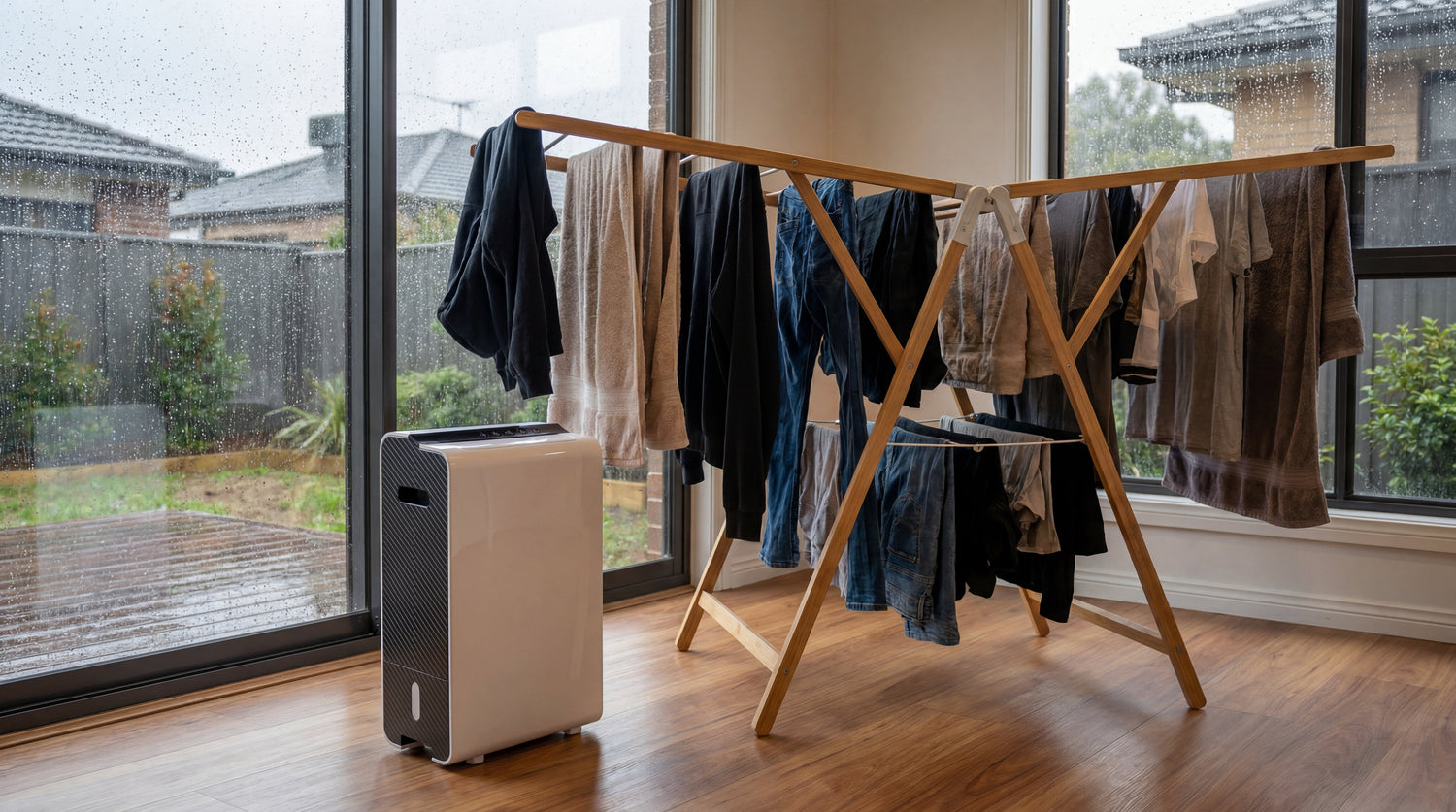
There’s nothing worse than washing school or work clothes during winter, only for the cold and wet weather to stop them from drying properly. We then bring the clothes inside, where they can take days to dry and often develop a damp, musty smell.
One of the best ways to dry clothes indoors is by using an Ausclimate Dehumidifier to create a small drying area in your home. A laundry, bathroom, spare room, or any closed-off space works best. Keeping the doors and windows shut helps trap the moisture from the wet clothes in the room, allowing the dehumidifier to remove it from the air much more effectively.
One of the best ways to dry clothes indoors is by using an Ausclimate Dehumidifier to create a small drying area in your home. A laundry, bathroom, spare room, or any closed-off space works best. Keeping the doors and windows shut helps trap the moisture from the wet clothes in the room, allowing the dehumidifier to remove it from the air much more effectively.
Place your clothes on a drying rack and leave a little space between each item, especially for thicker fabrics like towels, hoodies, and jeans. Good airflow is key to helping clothes dry faster and more evenly. Position the dehumidifier close to the clothes rack, but not directly against the clothes, and if possible, aim the airflow towards the washing.
Our 20 & 25L Smart Dehumidifiers have a dedicated Laundry or Clothes Drying Mode. T. This is the perfect setting to use, as it usually runs continuously at a higher fan speed to maximise moisture removal. If your unit doesn’t have this feature, you can still achieve very similar results by using Continuous Mode or selecting a lower humidity setting with the fan speed on high.
Adding an air circulator or fan to the room can also make a huge difference. Moving air helps pull moisture from the clothes faster, so they dry quicker and more evenly. This setup is especially useful during winter, when indoor airflow is limited.
Not only is this method gentler on fabrics compared to the high heat of a clothes dryer, but it can also help reduce condensation on windows, damp smells, and the risk of mould developing around the home during the colder months.

Leave a comment
This site is protected by hCaptcha and the hCaptcha Privacy Policy and Terms of Service apply.