
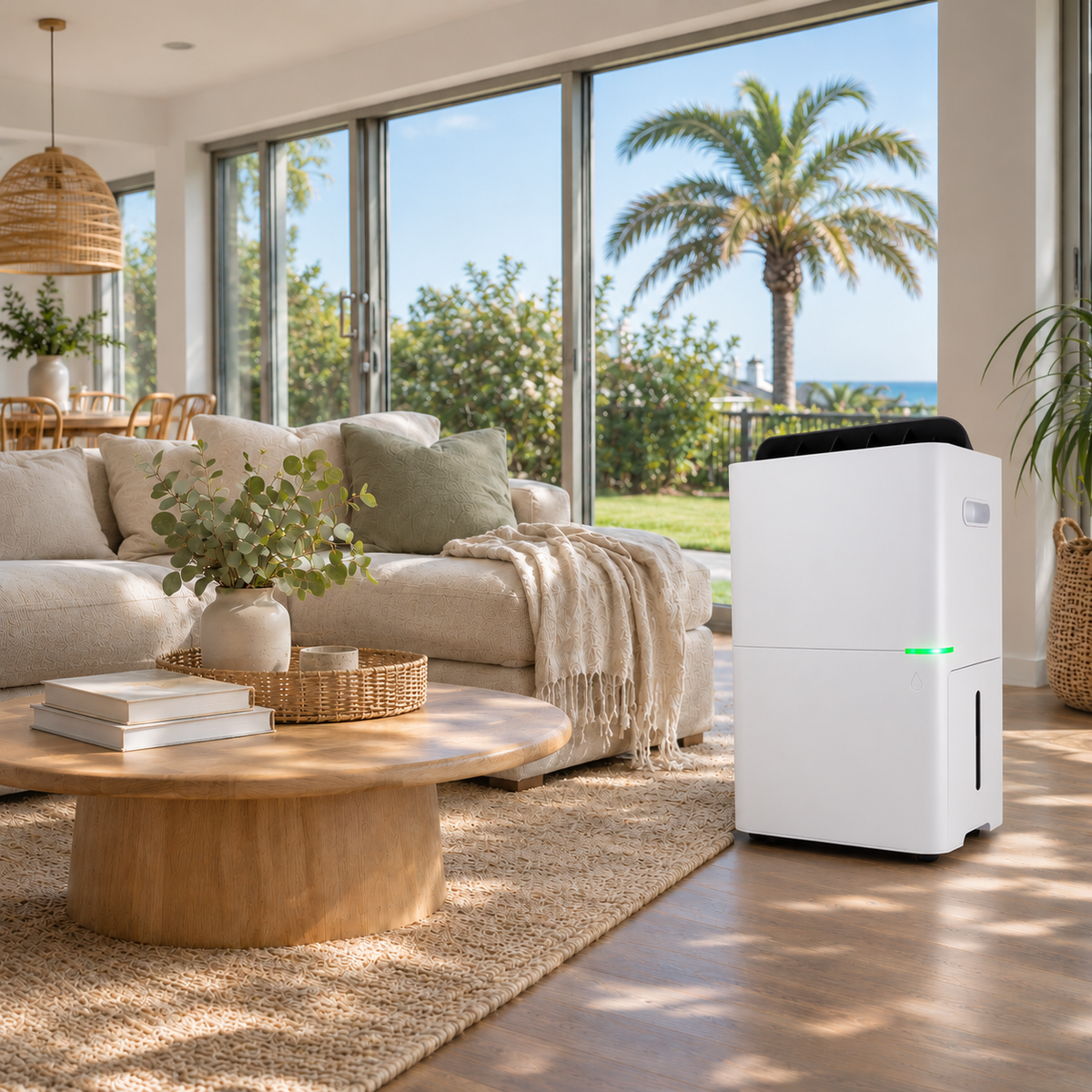
When you think of a dehumidifier, winter might be the first season that comes to mind. But excess moisture isn't just a cold-weather problem. During the Australian summer, humidity, heavy rain and changing weather conditions can also contribute to dampness inside the home.
From sticky bedrooms and musty smells to condensation and slow-drying laundry, excess moisture can affect indoor comfort throughout the year.
So, can you use a dehumidifier in summer? Absolutely.
A dehumidifier can help manage excess moisture in the air, making your home feel more comfortable and helping reduce the conditions that encourage mould and mildew.
Here's what you need to know about using a dehumidifier during the warmer months.
Why Can Your Home Become Humid in Summer?
Summer weather can bring more than just warmer temperatures. Depending on where you live in Australia, you may also experience humid days, tropical weather systems, heavy rainfall and periods of high outdoor humidity.
When moisture builds up indoors, your home can start to feel damp or stuffy.
Some common causes include:
1. Humid summer weather
In warmer, humid conditions, moisture can enter your home through open windows, doors and everyday airflow. If indoor humidity remains high, rooms can start to feel sticky and uncomfortable.
2. Heavy rain and summer storms
Rain can increase moisture around your home, particularly if water enters through leaks, damaged seals or poorly ventilated areas. Wet shoes, clothing and other items brought indoors can also add moisture.
3. Drying clothes indoors
When it's raining or particularly humid outside, hanging laundry indoors can seem like the easiest option. However, as clothes dry, moisture is released into the surrounding air, potentially increasing indoor humidity.
4. Everyday household activities
Cooking, showering and even breathing release moisture into the air. Without adequate ventilation, this moisture can accumulate, especially in smaller rooms and enclosed spaces.
What Are the Signs Your Home Has Too Much Humidity?
You might not always notice excess humidity straight away. However, there are a few common signs worth looking out for:
-
A sticky or humid feeling indoors, even when the temperature isn't particularly high
-
Musty or damp smells in bedrooms, wardrobes or living areas
-
Condensation on windows and other cool surfaces
-
Damp towels and laundry that take longer than usual to dry
-
Mould appearing in bathrooms, cupboards or behind furniture
-
Rooms that feel stuffy or poorly ventilated
A digital climate gauge can help you monitor indoor humidity rather than relying on how the room feels.
As a general guide, aim to keep indoor relative humidity around 40–60%. If levels regularly sit above 60%, it's worth investigating the source of the excess moisture.
Can a Dehumidifier Help in Summer?
Yes. A dehumidifier works by drawing in air, removing excess moisture and releasing drier air back into the room.
During summer, this can help:
Reduce excess indoor humidity
A dehumidifier helps maintain more comfortable humidity levels, particularly in rooms that tend to feel damp or stuffy.
Reduce musty smells
Musty odours are often associated with excess moisture. By helping to control humidity, a dehumidifier can address one of the conditions contributing to these smells.
Help prevent mould and mildew
Mould thrives in damp environments. Reducing excess moisture can help make indoor conditions less favourable for mould growth. However, existing mould and the underlying source of moisture still need to be addressed.
Help dry indoor laundry
Some dehumidifiers include a dedicated laundry mode, which can help remove moisture released by wet clothes and support faster indoor drying.
Protect belongings from moisture damage
Keeping humidity under control can help reduce the risk of moisture-related damage to furniture, clothing and stored belongings.
What Type of Dehumidifier Is Best for Summer?
Not all dehumidifiers work in the same way. The two main types are compressor and desiccant dehumidifiers.
Compressor dehumidifiers
Compressor dehumidifiers are a popular choice for managing moisture in warmer conditions.
They draw air across cold coils, causing moisture to condense and collect in a water tank. The drier air is then released back into the room.
They're particularly suitable for warmer environments and everyday humidity control during summer.
Ausclimate's compressor range includes several options for different room sizes:
-
Compact 12L Smart Dehumidifier: A compact option for smaller rooms and spaces.
-
Large 35L Smart Dehumidifier: Designed for larger bedrooms and living areas.
-
Large+ 45L Smart Dehumidifier: A higher-capacity option for larger spaces and more demanding moisture-control needs.
Desiccant dehumidifiers
Desiccant dehumidifiers use a different technology to remove moisture from the air. They are particularly useful in cooler conditions because they can continue operating effectively at lower temperatures.
For Australian households that experience dampness throughout the year, they can also be a useful option outside the warmer months.
The Ausclimate Cool-Seasons range is designed with cooler environments in mind.
Which one should you choose?
If you're mainly looking to manage humidity during warmer summer conditions, a compressor dehumidifier is a sensible place to start. If you regularly deal with dampness in colder rooms or during winter, a desiccant model may be worth considering.
The right choice will depend on your room size, temperature conditions and moisture levels.
How to Use a Dehumidifier Effectively in Summer
To get the most out of your dehumidifier, a few simple steps can make a difference.
1. Choose the right room
Start with the room that has the highest humidity or shows signs of excess moisture. This might be a bedroom, laundry, bathroom or living area.
2. Keep doors and windows closed while operating
For the best results, operate your dehumidifier in an enclosed room where practical. Leaving windows and doors open can allow more humid outdoor air to enter.
3. Give the appliance enough space
Position your dehumidifier on a flat surface with enough clearance around the air intake and outlet. Avoid placing it directly against walls, curtains or furniture.
4. Monitor your humidity levels
Use a digital climate gauge or your dehumidifier's built-in humidity controls to keep track of indoor conditions. Aim for a comfortable humidity level rather than running the appliance unnecessarily.
5. Keep up with regular maintenance
Empty the water tank when needed, clean the air filter according to the manufacturer's instructions and check that the appliance has enough airflow to operate effectively.
Does a Dehumidifier Make a Room Hotter?
This is a common question, particularly during summer.
Compressor dehumidifiers generate some heat as part of their normal operation. As they remove moisture from the air, they can release slightly warmer air back into the room.
This means a dehumidifier isn't designed to cool your home like an air conditioner. Its purpose is to reduce excess moisture, not lower the room temperature.
If your main concern is cooling, an air conditioner or fan is more appropriate. If your home feels humid and damp, a dehumidifier can help address the moisture contributing to that discomfort.
Keep Your Home Comfortable All Summer
A dehumidifier isn't just a winter appliance. When summer humidity, rain and everyday household activities contribute to excess indoor moisture, it can be a useful part of maintaining a comfortable home.
Whether you're managing a humid bedroom, drying laundry indoors or trying to reduce dampness in a living area, choosing the right dehumidifier can help you keep moisture under control.
Explore the Ausclimate Dehumidifier Range and find a solution to suit your home.
Frequently Asked Questions
Can you leave a dehumidifier running all day in summer?
Many dehumidifiers have built-in humidity controls and timers that help manage operation. Always follow the manufacturer's instructions, keep the air filter clean and ensure the water tank or drainage system is managed correctly.
Should I run my dehumidifier with the air conditioner on?
You can use both appliances if your home has a need for cooling as well as moisture control. An air conditioner helps cool the room, while a dehumidifier removes excess moisture. Whether you need both depends on your indoor conditions.
What humidity level should my home be in summer?
A general indoor relative humidity target is around 40–60%. Regularly higher readings may indicate excess moisture that needs investigating.
Can a dehumidifier help with mould in summer?
A dehumidifier can help reduce excess moisture, which is one of the conditions that encourages mould growth. However, it won't remove existing mould or fix leaks and water damage. Any existing mould should be addressed appropriately.
Are compressor dehumidifiers better for summer?
Compressor dehumidifiers are generally well suited to warmer, humid conditions. They're a practical option for managing excess moisture during the Australian summer.

Leave a comment
This site is protected by hCaptcha and the hCaptcha Privacy Policy and Terms of Service apply.